Build the plan around the actual roof.
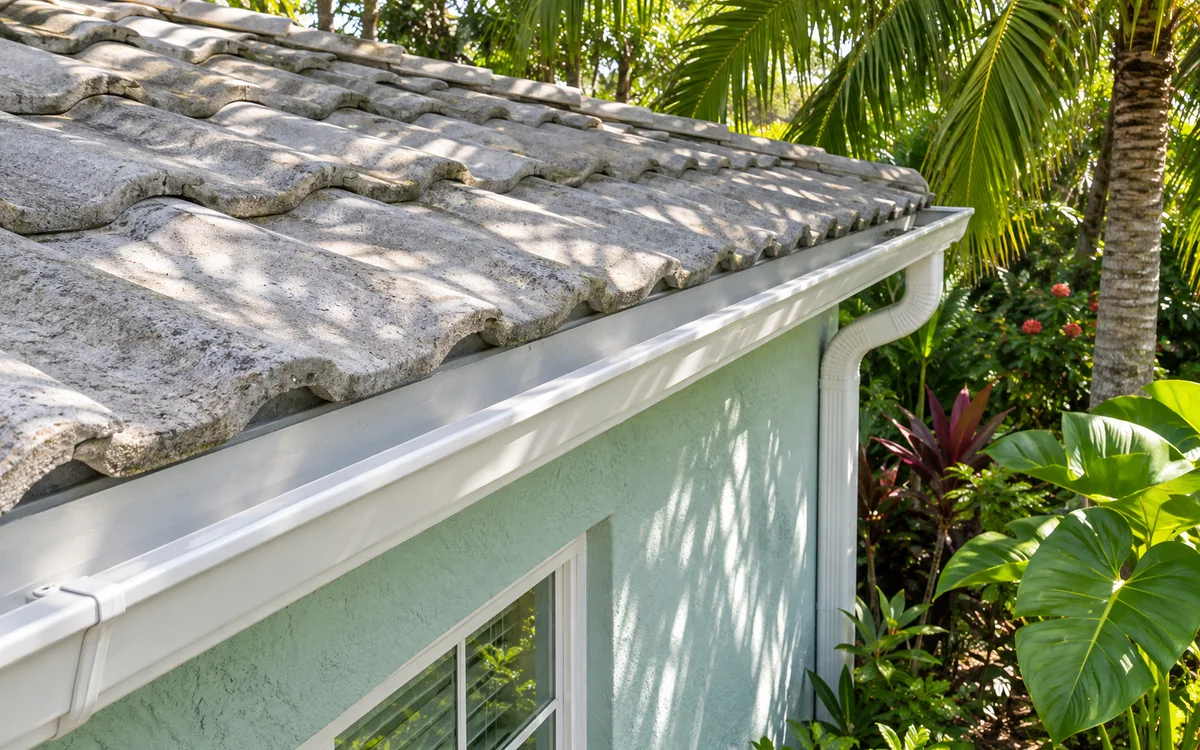
Maintenance is not the same checklist for every property. A tile roof, shingle roof, and low-slope section have different surfaces and details. Ask which tasks are suitable for your assembly and whether the manufacturer’s instructions or warranty documents affect the approach.
Separate routine observation and cleaning from repair work. If an item needs removal, replacement, or further investigation, have it identified and priced separately without hiding it inside a vague maintenance charge.
Pay attention to where water has to go.
Leaves, fallen branches, and other debris can collect around roof drainage points. Ask about gutters, outlets, roof valleys, and any low-slope drains. The task is to understand the water path and whether accessible areas need attention.
A cleaning visit alone may not resolve a damaged roof detail or a poorly draining area. If the same location keeps collecting water or debris, ask for a separate explanation. The maintenance record should distinguish what was cleared from what still needs repair.
- Accessible covering and flashing observations
- Debris around valleys, gutters, and drainage outlets
- Visible changes around vents and roof-mounted equipment
- Dated notes, photographs, and items needing follow-up
Use changes as a reason to review the plan.
New equipment, tree work, a roof repair, or unusual weather can change what deserves attention. Keep the contractor informed when another trade has worked near the roof. That makes it easier to identify which areas should be checked at the next visit.
Ask for a schedule suited to the roof and surroundings rather than assuming one interval fits every home. During a storm threat, follow official safety guidance. Do not climb up to clear a blockage while conditions are hazardous.
Keep maintenance records that answer questions.
Save the date, tasks performed, photos, and recommendations from each visit. Over time, those records can show whether an issue is new or recurring. They can also help a future repair discussion stay focused on what has changed.
Contact Rooted Within Roofing Service with the property ZIP code and your maintenance concerns. Ask what is included, what requires another visit, and how approval works for extra repairs. A useful plan leaves you knowing the next step and who is responsible for it.
Your questions, answered.
Does maintenance mean my roof will not leak?
No maintenance plan can promise that. Ask what the visit covers and what remains outside its limits, especially concealed areas and damage that occurs later.
Should a tile roof be pressure washed?
Discuss the roof material, condition, and manufacturer guidance before choosing a cleaning method. Do not assume a high-pressure process is suitable for the assembly.
Can maintenance replace a needed repair?
Cleaning and observation serve a different purpose from correcting damage. If a defect is found, request a separate description of the repair and its timing.
How often should my Miami roof be checked?
The useful interval depends on the system, surroundings, condition, and manufacturer guidance. Ask for a schedule tied to your property and review it after unusual events.